The Hitch-hiker - Road Trip From Hell

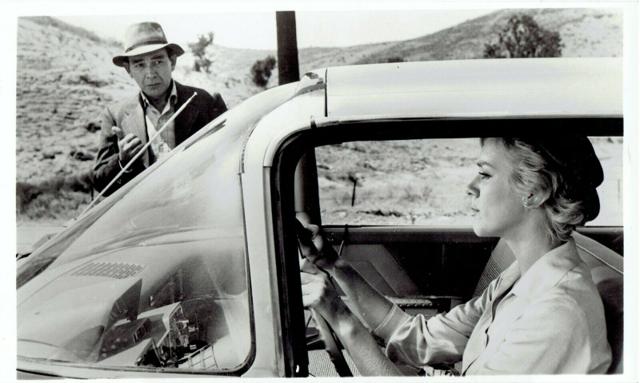
Nan Adams just wanted to drive from New York to Los Angeles. Simple enough. Gas up, hit the road, see some sights. But somewhere between Pennsylvania and who-knows-where, she sees him. The hitchhiker. Standing by the road. Looking right at her. She does not stop, because who stops for random hitchhikers? That is how horror movies start.
But here is the thing: he keeps showing up. Everywhere. She puts hundreds of miles between them and there he is again. Same raincoat. Same stare. Same outstretched thumb. You have to admire the persistence. Most stalkers cannot even keep up a text conversation. This guy is dedicated.
Fun Facts From the Shoulder of the Highway
- 🎭 This episode was based on a radio play written by Lucille Fletcher, first broadcast in 1941 on The Orson Welles Show. Orson Welles himself played the hitchhiker in the original radio version
- 🚗 The entire episode was filmed in just six days on a shoestring budget, with most of the driving scenes shot using rear projection
- 👻 Leonard Strong, who plays the hitchhiker, was a Japanese-American actor who often played villains and mysterious figures in 1950s and 60s television
- 🎵 The episode's score was composed by Bernard Herrmann, who also scored Psycho and Vertigo for Hitchcock - notice a theme?
- 🏜️ The desert highway scenes were filmed in California near Lancaster, which has been used as a stand-in for everywhere from Mars to the Middle East in countless films
- 📻 The radio play was so popular it was performed multiple times with different casts, including a version starring Elliott Lewis and Cathy Lewis
- 🌟 Inger Stevens was nominated for a Primetime Emmy for her performance in this episode - a rare feat for a 25-minute TV show at the time
Final Thoughts From the Back Seat
This episode taps into something primal: the fear of being followed. Not chased, not attacked, just followed. The slow dread of realizing that no matter where you go, something is waiting for you. It is the horror of inevitability. You cannot outrun it. You cannot reason with it. You can only keep driving until the gas runs out.
Inger Stevens carries the whole thing on her shoulders. Most of the episode is just her, alone in a car, slowly unraveling. It is a masterclass in minimalist horror. One woman, one car, one constant presence. Sometimes that is all you need.
"I have a flat tire. I had a blowout. But I am alright now. I am just fine."